I’m an artist, so I’m sensitive about my shit. So sensitive I’ve moonlit as my own nemesis and set up roadblocks and detours for my own ambitions. I’ve been so hell bent on thwarting my own personal “success” that I’ve even devised methods in which to induce nightmares to derail something as innocent as dreams meant to provide a sense of hope in dark times. Somehow artistry became synonymous with sadism in my subconscious and I’ve fought shark tooth and machete to make sure my own work doesn’t bask in daybreak or ride the sound-waves beyond my own inner ear. This immense level of sensitivity is perhaps distilled by the utilitarian nature of my mother’s paternal ancestors as logical innovation overrode artistic sensibilities while they fought for survival on their journey to achieve the “American Dream.” However, what can be more American than dreaming beyond inhibition and logic? The American Dream doesn’t sustain without the dream.
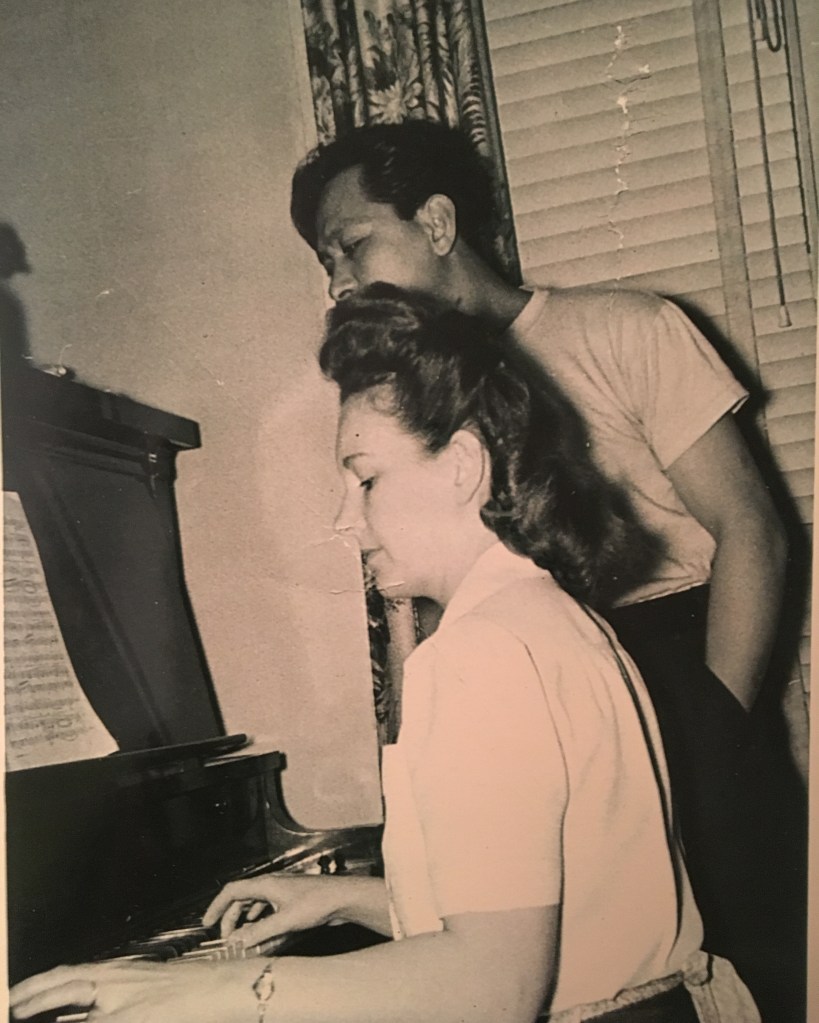
While my mother’s paternal lineage relied on diligent blue collar hustle to make ends meet and eventually secure their fortune, her maternal side seemed to be comfortable in their poverty if it meant enjoying the simple pleasures of life. Perhaps the privilege of Swedish, German, and Irish descent played a critical role in this mentality, but nonetheless, their legacy didn’t rely so much on monetary wealth as much as it did the arts. To be specific, the greatest gift that could be passed down from one generation to the next was not only a boundless passion for music but the ability to create it. On down the line, from the fingertips of one generation to the next, everyone from the Petrees to the Estradas had the gift of bringing 88 black and white keys to life in such a vibrant manner that the worries and woes of living were drowned out and forgotten until the reverberation of the final chord struck had stilled back into silence. A gift of the ears would become a curse of the heart that has plagued me since my adolescence.
For some reason unknown to me, even to this very day, a dissonance of the keys was struck and the legacy of concert pianism skipped over the Rollolazo generation in the branch of the family tree that I sprouted from. While my grandfather’s girls played various woodwind instruments, none of them seemed to embrace the keys the way their maternal predecessors had. Maybe survival, maybe some sort of childhood trauma all of us sustains in way or another, but the gift seemed to sweep over and gain enough momentum to knock me clear the fuck out by the time I sang my first note in the form of a cry as I exited the confines of my mother’s womb. By the time I was born, grandpa was hellbent on having his own live-in Beethoven. But while he was seeking ‘Odes to Joy’, I was cultivating a level of moodiness best expressed by the nocturnes of Chopin.
Although captivated from a young age by the way my grandmother so elegantly and effortlessly brought those 88 keys to life, I initially fought the piano as tough as my grandfather’s family fought to come to America. The piano served as something of a Monet for me. Beautiful from a distance but a heap of a mess trying to navigate as my baby hands struggled to stroke a cohesive melody from them. I could hear the music. I could see the music gliding through my grandmother’s fingertips, but I couldn’t create the music. Not in that way at least for a decent chunk of my early years. The most organic way music found me was through the chords produced by the voice, not by the keys. Through years of trials and insecurities, I devoted the best (or at least what I consider the best parts of me) to the study of voice until life and trauma struck me in ways nothing could prepare me for. Around the age of 25, I set aside my vocal studies and aspirations in the way someone stores their dark secrets in a padlocked mini casket in the deepest bowels of an attic. In retrospect, doing that was a way of suppressing the most chaotic parts of myself so that I could survive a time in which music couldn’t seem to save me the way it could the Petrees or the Estradas. No matter how hard I struck at the keys or how mellifluously poems of pain sprang from my lips, teeth, and tongue.
For a time, I wouldn’t let music heal or follow me despite how frequently it tapped me on the shoulder and asked me if we could have one last dance for old time’s sake. What good could music be to me in a world I’d manifested in which only logic, strategy, and law could exist? In the wake of my great grandmother’s 12th sunset anniversary, and at the crossroads of a very bewildering moment in my life personally and professionally, I remembered not only the gift I’d inherited from her, but the wisdom she left me in the hopes I’d never surrender loyalty to her legacy. Music not only sustains us, it’s how we can give love and joy to others and in turn, how we can administer those very things to ourselves. Music is as critical as food, water, and shelter, and is a show of love as much as a hug or a kiss. As I begin to heal the deepest wounds life has inflicted on me over the years, I am turning my attention back to music remiss of the expectation it is to be anything greater than a thing of beauty and a soundtrack to life.
Marybeth Mayzak was a force. There are very few people in my life I’ve ever been fearful of, and this woman was near the top of my minuscule list. However, in retrospect that fear was likely more so an admiration and the deepest respect. She was commanding without having to try. She was confident and vibrant. She was bold but so elegant and a lady in every sense of the word. She was also a badass. Gritty. Real. She was her whole self all day, everyday and her passion for what she loved and believed in was pure and unquestionable. She was a boss bitch before we even had the lingo for it.
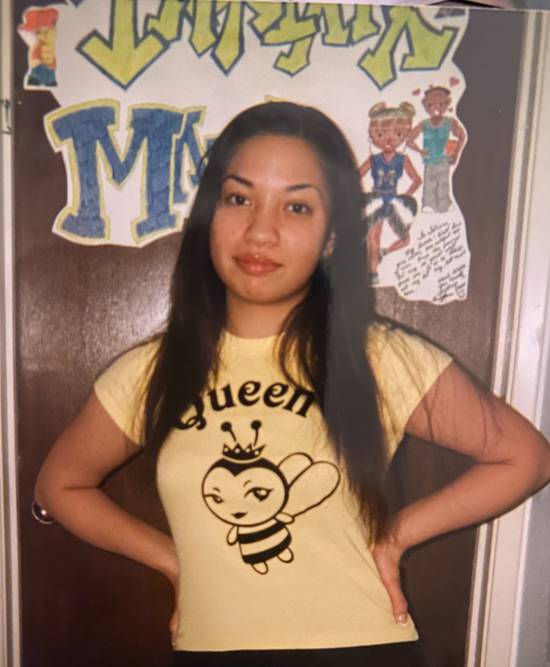
High school was a hellacious time and experience for me. I had troubles at home and troubles with myself as I was coming into my own as a woman of color in some very white ass spaces. But Mrs. Mayzak saw me. She accepted me as I was and somehow seemed to know who I could be. Oftentimes, without even having to say anything, she gave me the push I needed to come into my own and be as I was meant to be. As nonchalant as I may have acted in her classes, her approval meant the world to me, and as a young musician I soaked up all that she could teach me. It was a blessing to be welcomed into her Mixed Chorus class Freshman year and finally find a space where I felt a sense of belonging, purpose, and most importantly acceptance. I LOVED coming to class everyday and sharing my own passion for music and vocal performance with a woman who freely reciprocated her great love of music – especially The Beach Boys. Mrs. Mayzak was a true California girl and as much of a West Coast OG as Tupac, with just as many colorful stories to share.
Mrs. Mayzak not only pushed us to be our best, she gave us her best everyday she stepped foot to the front of the room. I remember her signature hair do and the clips she’d wear on performance days with her collared dress and pearl necklace. I remember her stern facial expressions and how she could say a mouthful in just a glance. I remember her energy as she struck chords on the piano and vivaciously led us through warm-ups. I remember the fear I had going into my audition for the advanced women’s ensemble, Divina Voce, and the twinkle in her eye as we went through the exercises. The knowing look she gave me as if to communicate I could calm my ass down because we both knew I’d already worked for and earned my spot in the group. I remember my banter with her about hip hop and tanking my history presentation but, with her guidance, developing the analytical and research skills that would ultimately get me to Georgetown today. I remember coming to visit after my first year at Bellevue Community College and sharing my experience in Dr. Daudi Abe’s class which was essentially Hip Hop in America. She laughed and told me she wasn’t surprised but she was happy I was finding my place and following through on what I loved. There are so many more memories I could share, but above all I’ll always remember her authenticity, her consistency, and that I always felt seen and accepted.
The last time I saw Mrs. Mayzak was several years ago at either my brother’s graduation. She was retiring and moving on to her next chapter. I was saddened her time had come to leave teaching but thankful to have shared a space and time that I could treasure and recount as I trudged through the chapters of my own life. Upon learning of her passing this evening I’ve become flooded with these beautiful memories and a deep sense of gratitude to have had the privilege to know and be influenced by such a magnificent woman. Although I feel a sadness deeper than I could’ve ever imagined, Mrs. Mayzak left us all with a gift in her own words. Again, thinking of and uplifting others even in her last moments.
I love you Mrs. Mayzak. You are a reminder of the good that has been in my life, even at the worst of times, and you will forever be in my heart and in my scales.
I’m from the era of raw and unfiltered Brown Sugar when D’Angelo would’ve sung smooth circles around Chris Brown, and Sidney Shaw, portrayed by Sanaa Lathan, solicited us all to reflect on when we fell headfirst in love with hip hop. The era that birthed and raised me is also responsible for nurturing the genius that manifested as a rose sprouting from concrete, and the ingenuity that breathed new life into the House of Gucci after the untimely demise of its prodigal son Maurizio. It is an era that is as equal parts Tupac Amaru Shakur as it is Tom Ford. An era that taught us with great controversy and daring audacity for survival comes the greatest art and innovation. So… When did I fall in love with hip hop?
The answer isn’t as complex as it is amusing and perhaps endearing. My conscious self would rattle off a date, artist, and song title, but the subconscious voice within me boldly proclaims it’s the moment my unborn fetus wading within my mother’s womb could detect and internalize the soundwaves bellowing from my father’s stolen sound system. He’ll tell you my uncles happened to have a spare system or two, but my adopted uncle, Eazy-E, mellifluously chronicles how ‘Boyz-N-the-Hood’ forge such come ups. But I digress…
I am inarguably the product of one funky 1987 mixtape that narrates the evolution of the Bronx’s baby as it traveled to the West Coast and graduated from the streets of Compton. I am the child of Kool Moe Dee’s ‘Wild Wild West’ ever intent to ‘Make It Funky’ as Ice-T and quick to remind anyone who challenges my bravado ‘I Ain’t No Joke’ like Eric B. & Rakim.
However, in all truthfulness, although hip hop has set the foundation for my earliest sense of identity, it was often a second language I didn’t fully understand or appreciate. Living with my maternal grandparents in an upper-middle class, white, suburban neighborhood, playing the part as the neighborhood ‘Fresh Princess’ wore on me most days, and I often suppressed an inherent affinity to the beats and rhymes that had pulsated within me since birth. For a time, I renounced hip hop, like Peter playing Jesus to the left, as it was more important for me to practice covering than forsake assimilation and endure additional taunts and torments from my bubble gum pop pedaling peers.
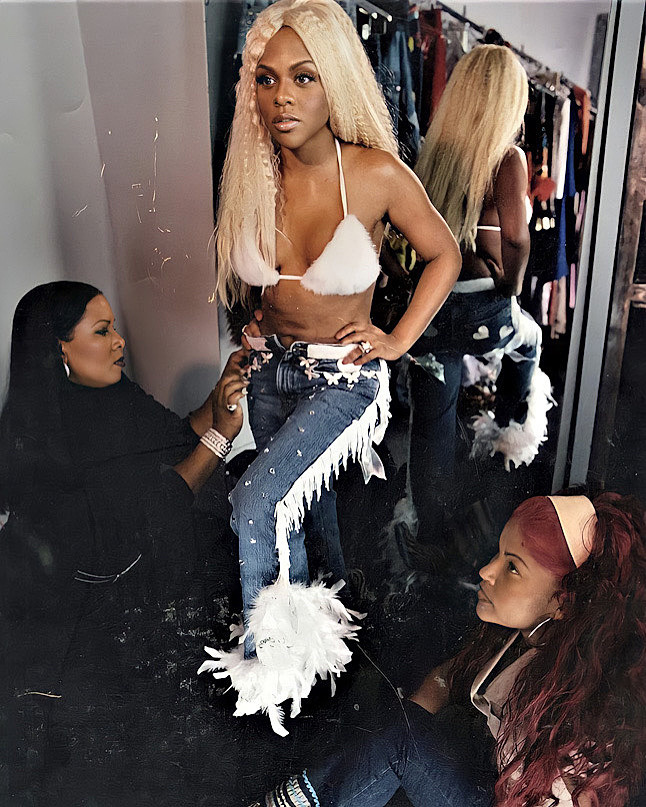
Now, what does this have to do with fashion and catwalk talk? Literally everything. My dueling passions desperately sought a sign and a savior. I needed a Chanel clad, razor tongued, Fairy God-artist to foretell my future and mentor my meandering imagination. Enter stage right, Kimberly Denise Jones. The Notorious K.I.M. La bella fuckin’ don herself. Lil’ Kim the Queen Bee. The matriarch of Bad Boy and the messiah I long awaited, who taught me how to tell my ‘Player Haters’ ‘Fuck You’ and ‘No Matter What They Say’ I’m still the ‘Queen Bitch.’ Kids of the 90’s are built different. To call us ‘Hardcore’ is an understatement.
Kim’s provocative lyrics unapologetically thrust a shockwave through hip hop with the force of a 9.5 magnitude earthquake. Simultaneously, she perpetuated a metamorphosis of self-expression through the means of creatively curated couture from the most well-recognized and well-respected designers known within the fashion industry. While fashion and hip hop had already begun to merge with the signature Adidas and Kangol uniform donned by Run D.M.C. in the 80’s, it had yet to reach the elevation Kim bolstered at the turn of the decade. Kim represented a new intersection within hip hop in which image became a critical element of an artist’s self-expression and branding. Through her, hip hop entered a marriage with the finest houses of design, and 1994 became my official anniversary with hip hop.
Fashion along with hip hop has been an essential element of my pedigree and the former is accredited to the mentorship of my glamazon maternal grandmother. While she may not have fully understood my tastes in my music, she saw within me the makings of a fashionista in her own likeness and afforded me access and exposure to luxury and labels that would’ve alluded me had I been raised on the means of my parents alone. Under her guidance, as well as the influence of Lil’ Kim and her numerous predecessors, I not only shaped my persona but merged passions that ultimately rely on one another to exist. Through the means of fashion, my grandmother taught me style and grace as if she’d penned lines for Notorious B.I.G. himself. My father taught me the dozens and word play through the stylings of hip hop and avowed a lyrical cadence to my speech and writing. However, the coalescence of my two passions is thanks to hip hop’s reigning Queen Bee.
It’s impossible to talk hip hop or fashion exclusively as they inspire and challenge each other’s spaces. They chronicle where we’ve been as a society, narrate our current condition, and translate our trajectory for the future. To ask myself when I fell in love with hip hop is to ask my earliest memory of self-discovery and what authenticity does for art. My most sacred rite of passage was witnessing the officiation of hip hop and fashion and embracing my destiny as a Menace II the Runway.
In an unsolicited moment of sedentary solitude, I have found myself yet again at another crossroads situated somewhere between unbridled wanderlust and the abhorrence for what Gen-Z has coined “adulting.” As I attempt coercing myself to reflect upon the multitude of reasons my gratitude at current should overshadow the inner angst I possess while aging into my mid-thirties, I cannot refrain from reciting the words of Paul Beatty’s ‘Mickey Mouse Build a House’ incessantly in the depths of not only my mind, but also in my jaded soul. The words are frank. To the point. And yes, unfiltered.
don’t you ever feel
like in the game of life
you was the last motherfucker to say
NOT IT
The words of Beatty somehow perfectly capture a decade of my life in which I always seemed to be on the brink of self-destruction, but somehow survived and lived to recount. My twenties were tempestuous to say the least, and although I have found myself in the midst of the uncomfortable calm subsequent to a wayward storm, there is a part of me undeniably thirsting for another drink from the chalice of anarchy. A chalice betrothed upon a pillar of modern-day society which, although we mock and make every attempt to devalorize, we each, in our own right, fuel and subconsciously revere.
It is here we confirm that the devil not only wears Prada, but she dons a hue of Armani Luminous silk and douses her lashes in calculated strokes of Dior Show. She commemorates her evening’s conquests upon her cheeks with an orgasm fabricated by NARS, all before accentuating her pout with a vibrant stain crafted by M.A.C. and mystifying her impenetrable aura with a splash of Tom Ford.
THIS, my comrades, is the business and the empire of beauty. It is here that we question if our choices feed a carnage which demolishes our sense of self-worth and beauty or, conversely, if we have bought into a multi-billion-dollar franchise which encourages and inspires the aforementioned. In complete translucence, my personal response is greatly dictated and potentially varied upon the way in which the question is posed, and the elements utilized to determine insight and opinion.
As a self-proclaimed veteran in the beauty industry, I admittedly was a late bloomer. I say this within the context of the right of passage into womanhood via make-up and its endless possibilities for self-expression created by the right (or sometimes very wrong) selection of shadow, various mediums of liner and infinite textures and shades of lip color. If I were to travel back in time to chronicle a spoiler alert for my 16-year-old-self, there’s a definite likelihood I would be labeled a con upon sharing information I’d one day don a brush belt, slang make-up and painthuman canvases for a nine to five. It isn’t so much because I did not possess the aptitude for glorified face painting, but rather because make-up was considered contraband for me in my household.
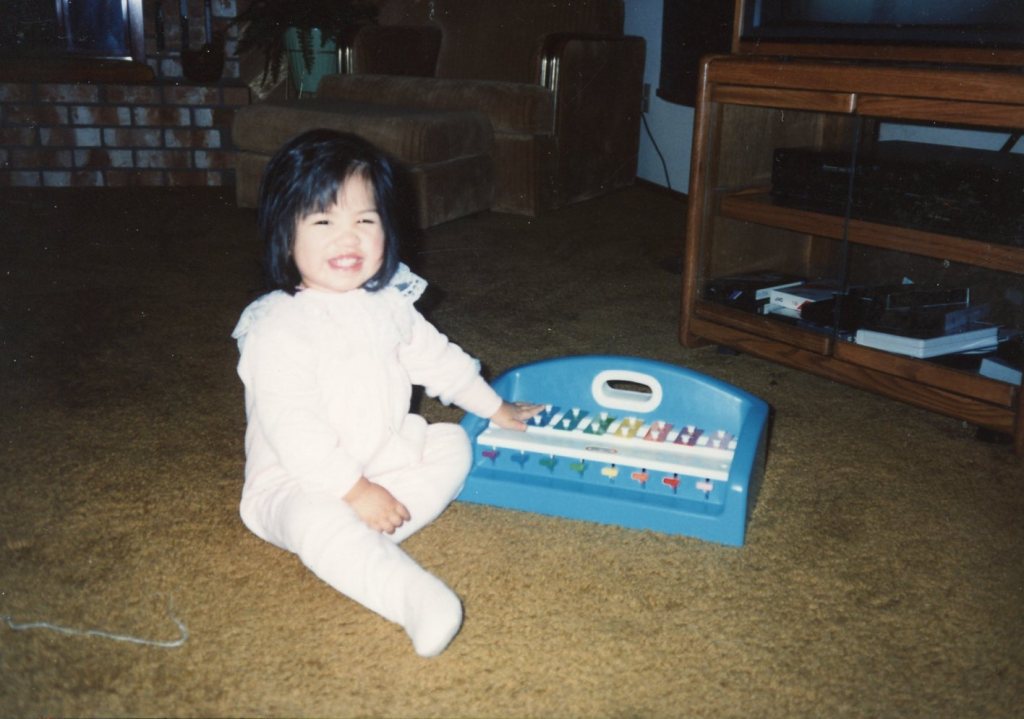
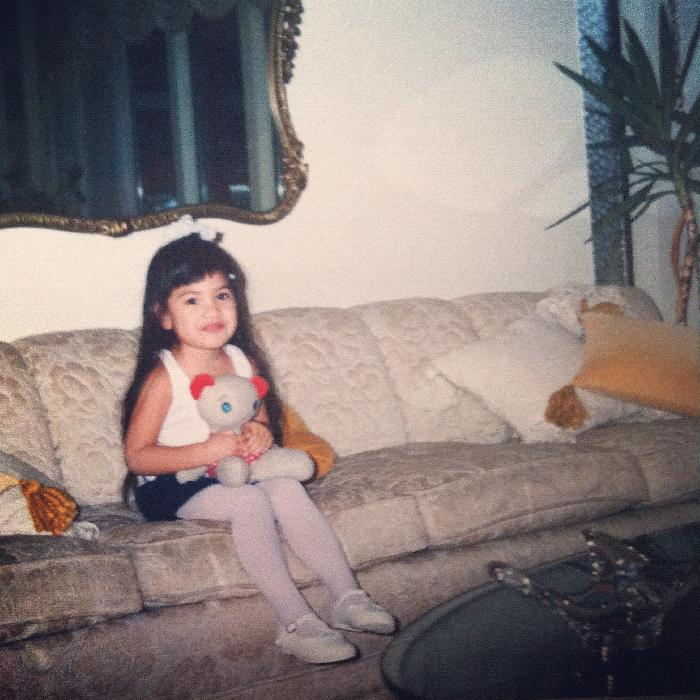
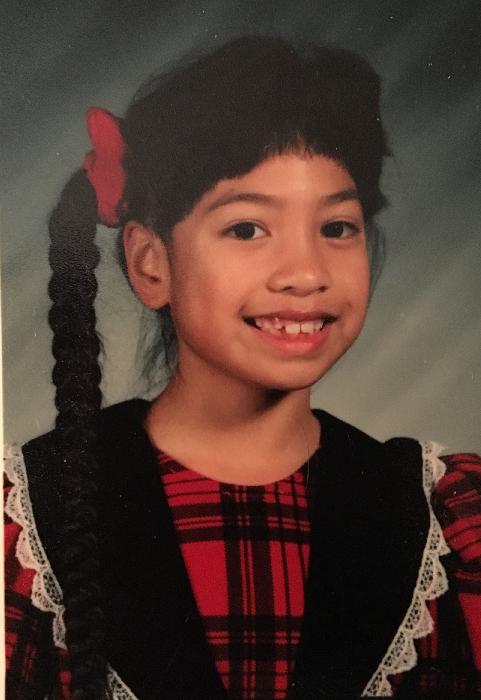
Little me. Age 4. My first client was Jody Bear and if you look closely, you can see I’d given her ‘power brows’ with a Magic Marker.
Despite having a cosmetologist grandmother (albeit on the maternal side), my father construed the notion that make-up acted as the gateway drug to corrupting adolescence and fast-tracking me to teen pregnancy, underage drinking and multitude of other sinfulness. The majority of my childhood was spent brandishing forbidden nail polish at school and quickly coming home to remove it before my father had a chance to examine my hands and know I’d gone rogue for a, now naked, handful of glorious hours. I suppose an innate gift was stifled for almost two decades unless my artwork created with the acceptable mediums of tag board and markers were more closely examined.
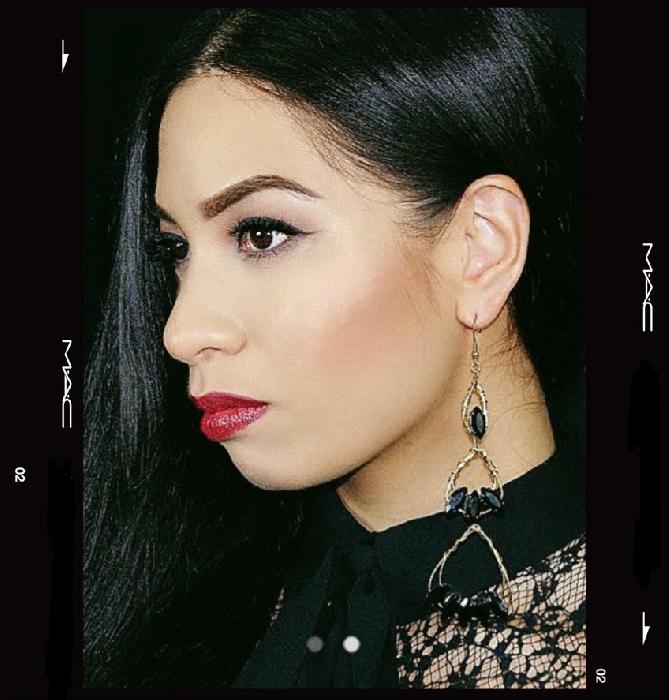
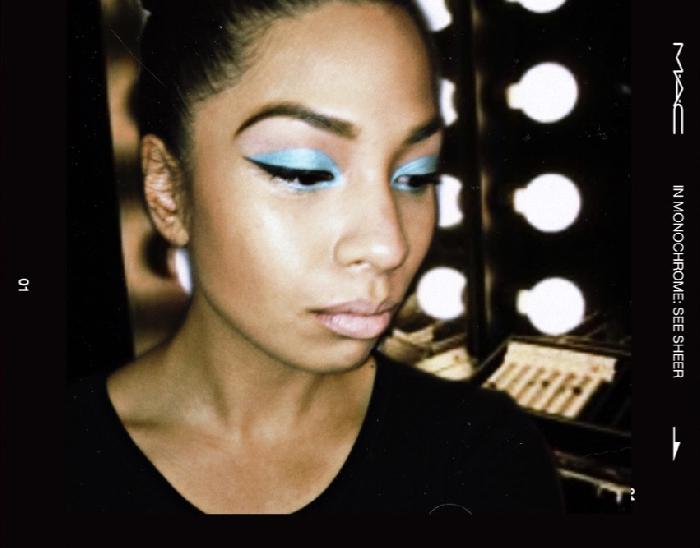
Fast forward to the end of the initial decade of the millennium and there I am in all of my noir-on-noir glory, strapped and heavily armed with a well-crafted brush belt, ready to wage a war on compliant victim’s bare face. After years of suppressing a desire to get elbows deep in the Devil’s paint I had arrived and earned myself a position with arguably the world’s most respected, revered and envied cosmetic label to date. And, to put it simply, nobody couldn’t tell me a damn thang for those four and a half years of blood, sweat, tears and product stained hands.
Upon this current reflection, I reluctantly suppose it should serve as no fascination what the beauty industry has evolved to. It was egos then and continues to breed unbridled egos now. Recollecting that mindset assists in my ascertaining who and what a make-up artist is today in an age when the industry I loved so much has become completely bastardized. Corrupted in a way I never fathomed an external force had the capability and gusto of doing.
In once fowl ass swoop, the age of the internet perversely manipulated the beauty industry into a culture in which the least deserving, the least qualified and yet the most self-confident and self-obsessed have now taken over. They’ve assumed this unnerving control in which being self-taught serves as formal training and certification is merely earned via hours of watching YouTube and reading a beauty blog curated by someone who’s equally as novice as their audience. The blind now leads the blind in an enterprise in which vision is the only way to innovation and excellence.
Musing to myself at my current crossroads, the nostalgia of my most formative years creates a solemn reverence for what once was and now ceases to ever be again. Analyzing this juxtaposition of historical authenticity verses present day counterfeits reinforces that my retirement as a (legitimately) advanced certified make-up artist remains the wistful truth. However, that retirement does not dictate an abstinence from an industry that taught me lessons beyond my moving canvases, temporary creations, and maddening ‘skill drills.’
I survived the ‘Golden Era’ of make-up and still live to tell the glamorous, the sub-par and the truth of it all. These tales are best presented in the same manner as photographs in bona fide artist’s portfolio – UNFILTERED.
‘A lot of people – Black, white, Mexican, young or old, fat or skinny – have a problem being true to they self. They have a problem looking into the mirror and looking directly into their own souls. The reason I can sell six million records, the reason why I can go to jail and come out without a scratch, the reason I can walk around, the reason I am who I am today is because I can look directly into my face and find my soul’ – Tupac Shakur (Feig, 2016).
In my adolescence, what I lacked in direction I exponentially made up for in imagination and ambition. I may have not understood from a young age what I aspired to be, but there is no question I had robust ideas about who wanted to be. Additionally, what I lacked aesthetically was compensated for by an insatiable hunger for intellectual pursuits and stimulation. Whoever I was manifesting was going to be an embodiment of all the same things I’ve grown to admire and respect about the late Tupac Amaru Shakur. More than a musical prodigy, what I revere most about this man is his multifaceted talent. The fact that he was far from one dimensional and that he was raw, gritty, fearless, bold and audaciously unapologetic about who he was to his very soul.
As NPR (2016) illustrates, with Tupac ‘You get vulnerability, you get an exploration of manhood from different angles, even admitting all of his many mistakes … And so those things, that kind of honesty — which is so rare for a lot of people — made him someone who became a touchstone for folks’ lives. And that’s why they responded to him, and still do.’ While it is unfathomable that anyone could replicate the enigmatic being Tupac was, that doesn’t discount that his legacy sustains through the many lives he impacted through his vast body of artistic work and his uninhibited rhetoric of wisdom.
I was only 9 years-old when Tupac departed this broken ass world and advanced to a realm more worthy of his gifts, however, in less than a decade he was able to enrapture my own creative sensibilities. If I didn’t know shit about what I aspired to, I knew whatever the fuck it was had to be prolific as everything my role model embodied and produced. Ike Okwerekwu (2019) describes that Tupac ‘lived with a strong sense of purpose’ and challenged others to force themselves to think outside of the confines of the boxes society constricts each one of us to. While my approach to life subsequent to the influence of Tupac is seemingly, if not completely, unorthodox, I am indebted to him for the guidance he’s provided me posthumously as my personally appointed ‘thug angel.’
If I was ever remiss of a claim to fame, it cannot be said that I possessed any shortcomings of dexterity with composition or the ability to morph mere pen and paper into a personal magic wand and scriptural manifesto. Raised an avid reader and living in a unique ‘have yet have not’ circumstance, I learned that traveling was only a book, a story, a poem away and even if you lacked superficial assets, a well-educated mind was exponentially more valuable than any material possession. Coming from a pedigree that was not founded upon formal education and academic status climbing, imposed a ravenous hunger to conquer territory which historically eluded my ancestors. My privilege did not come from wealth, rather, it came from sheer tenacity and relentless ambition to survive which I saw mirrored in the man Tupac projected. In his own words ‘I’m 100 percent original, and that’s what got me here. My rap music is more understandable, slower. It tells a story. You can write a book on each of my thoughts’ (AZ Quotes, n.d.). Thus, I took careful note of his heirlooms of wisdom and made it my focus to nurture my “ambitionz az a ‘writer.’”
As demure as I may personify, I can assure you that I ain’t one to be fucked with, and that’s largely because I can’t afford the cost of failure or being hoodwinked. I know what it is to settle and to not have options and as Tupac said in 1994 ‘Instead of me always getting shut out… Instead of defenseless, having power’ (Blank on Blank, n.d.). I grew up in a world absent of immediate academic role models. Nobody directly involved in raising and mentoring me had earned academic accolades beyond public primary education. Additionally, I never possessed the ingenuity of my familial predecessors to undertake entrepreneurial pursuits that made my grandfather a man of prominence and financial stability. The greatest risk I had the foresight to undertake was the ceaseless investment in my formal education. Again, a right and privilege fought for and not easily garnered. Merely dreaming about attending Georgetown University was a daring endeavor on my part, but actually having the balls to apply and gain admission was unconscionable considering my pedigree.
Being a mixed kid in white America is not for the faint of heart and it’s a bitch growing up around peers that can benefit from the privilege of nepotism while you have to scrape, claw and fight for your seat at the table. In most cases, however, you realize you’re not a welcome dinner guest and thus are encumbered with the burden of crafting your own seat and ultimately carpentering your own motherfuckin’ table. It’s a bitch. It’s tiring. But it’s life and, again, this shit ain’t for the faint of heart! While I’m accustomed to being overlooked and often silenced, I’m also adept at constantly being challenged and being audacious enough to clear any hurdles society has tried to place in front of me. I am far from an athlete, but life has had me competing in mental Olympics since I could process analytical thought.
Lately I’ve been telling people that had it not been for Tupac I would not be a Hoya. While to some that’s an outlandish claim, I mean that shit wholeheartedly. My father is a bonafide OG. By having me at such a young age (he had only just turned twenty-one), he incidentally raised me on hip-hop and that consumption at such an impressionable stage accounts for much of my foundation for being. Honestly, he did me a tremendous favor as without it, despite my multiracial background, I stood a great chance of being uncultured. As Vikas Shah Mbe (2015) shares ‘It’s important to remember that hip-hop is not just about music. It’s a unique era of culture where fashion, art, music and language became deeply pitted with metaphors that became consistent, ubiquitous and global. Hip-hop is unplanned – but a reflection of shared truths in communities… This is a mode of expression, a rebellion, communication through the hijacking and transformation of elements of cultures – creating something new, owned by the generation from who it was manifest.’ Hip-hop was as unplanned as my birth and as unforeseen as the intellectual marriage I would forge to Tupac.
Growing up so vastly insecure led me to seek solace in anything that represented what I felt and how I saw myself inwardly but couldn’t express outwardly. Intellectual and artistic inclinations aside, Tupac and I are wildly different people but the bravado he wasn’t afraid to exercise any and everywhere is what I bring to the table to get it together in my professional life and to make an impression when I’m in the classroom. I’ve cultivated a knack for weaving race and equity into any topic of discussion (I don’t care if it’s a physics class, trust, I’mma find a way!) but my most lethal asset is my ingenuity with words. I can’t think within or be confined to a box both because society was never ready for mothafuckas like me and, if it’s anything I learned from Tupac, that’s no way to live or excel.
I dubbed myself ‘MACkaveli’ as a nickname when I worked for MAC Cosmetics one day when a co-worker and I were finding creative ways to pay homage to our hip-hop idols and incorporating the brand name. What started off as an innocent game created an identity I’ve assumed as a model and as a writer. Tupac understood being multidimensional better than anyone, professing ‘everybody’s at war with different things… I’m at war with my own heart at times’ (Good Reads, n.d.) and took full ownership of that vulnerability. I’ve been able to learn from that raw demeanor and own every part of myself, even the shit I despise the most, because I know there’s power in anything you can learn to overcome. Even the worst parts of yourself can be manipulated into something useful, and the ability to accept that shit prevents anyone from weaponizing you against you. By embracing this understanding of self, I’ve been able to utilize my own vulnerability to my advantage and take risks that can’t be pursued when you’re hell bent on being ‘pretty’ and ‘perfect’ all the time. (Ugly ducks be winning!)
As Tupac languished in poetry, I’ve always dealt with a sense of yearning for acceptance and respect without compromise to who I am in my truest essence (Shakur, 1999). It’s a hard ass undertaking to be authentic in a world that claims to celebrate diversity yet demands submission into uniformity. What I have formerly loathed within myself, I’ve ultimately come to embrace because I realize it’s my flaws and own audaciousness that’s garnered me a seat at the table mothafuckas never dreamed I’d get the invite to. Having internal discourse used to provoke a sense of inadequacy until I studied how Tupac had manifested his own into a catalogue of lyrics and dialogue that perpetuated his eternal patron sainthood as the voice and prophet for the weary and restless. I was able to be introspective and recognize this discourse is a superpower because it constantly keeps me working, keeps me on my toes, and prevents me from buying in to any notion that I’ve reached a plateau in which I can afford any complacency and believe I’ve reached my personal epitome. It’s because of him, that ‘I have no fear, I have only ambition and I want mine’ (AZ Quotes, n.d.). It’s because of him that I can ‘live and learn twice as fast as those who accept simplicity’ (Shakur, 1999). And it’s because of him that I can do things my way and dare to be a Hoya.








 My Ambitions Az a HOYA